1
Fleet racing
Because fleet events run over several days, every result carries forward. The RS Feva Nationals were four of those days, in conditions and against a standard well beyond what I was ready for at the time. I had to learn to let a bad race go and start the next one properly. Staying steady over that many races took as much mental strength as physical, and it is where I built most of my resilience — in sailing and outside it.
Events
-
RS Feva UK Nationals
Fevaship Award
-
Itchenor Schools Week — Feva
-
Firefly Inland Championships
-
Itchenor Schools Week — Firefly
-
Bough Beech & Bewl Water Open Races
2
Team racing
In team racing, I learned how much depends on communication, and on helping each other out. We got better at talking on the water, at covering for a boat that was struggling, and at staying with a race that had started badly. Our results improved as a byproduct. Alongside this I started training with a strength coach, mainly to hold form through longer race days.
Events
-
NSSA Double-Handed
1st runner-up
Juniors
-
BSDSRA Hoad Shield
1st runner-up
Juniors
-
BSDRA Finals
Juniors
-
Eric Twiname Team Racing
6th
Juniors
-
Topper Team Racing
2nd runner-up
-
Rutland Top Teams
3
Captaincy
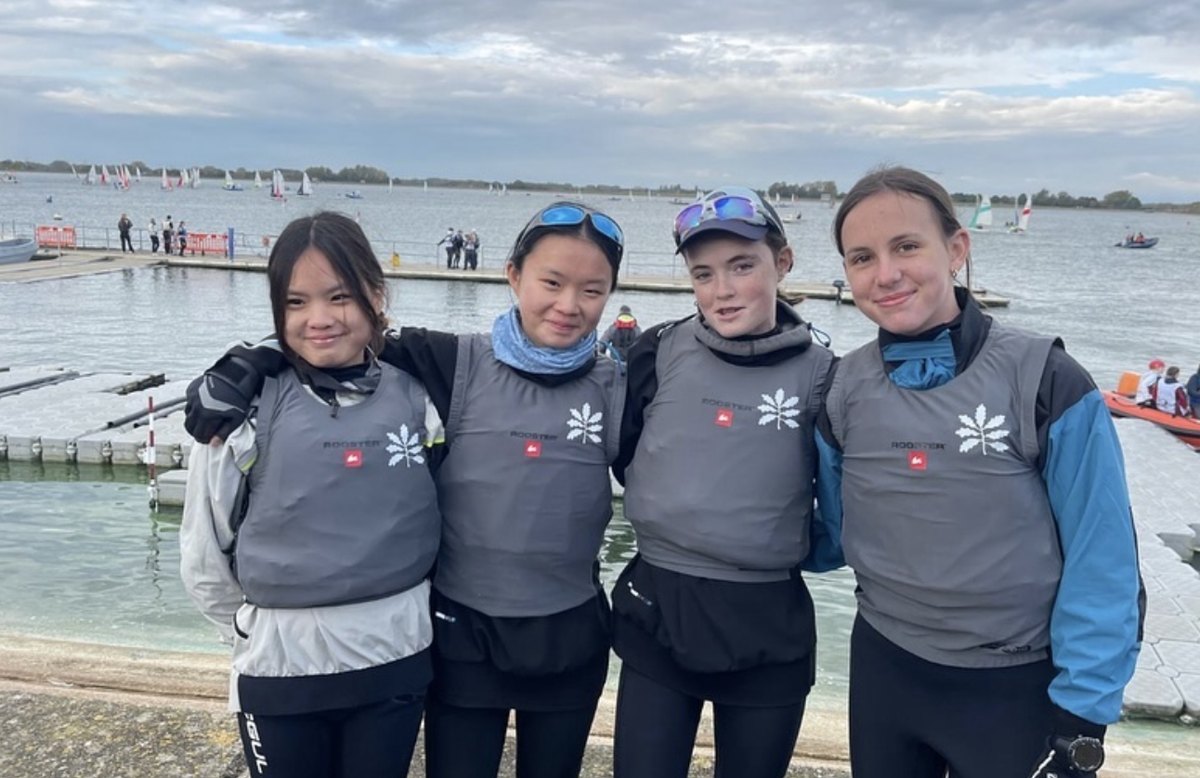
I captained the team at the southern regional and the national finals. What I felt the team needed most was steadiness across long days of racing. I focused on keeping morale up when it dropped, on being honest with each other about what had gone wrong, and on making sure everyone went back out for the next race ready to sail it well.
Events
-
BSDRA National Finals
-
BSDRA Hoad Shield
4th